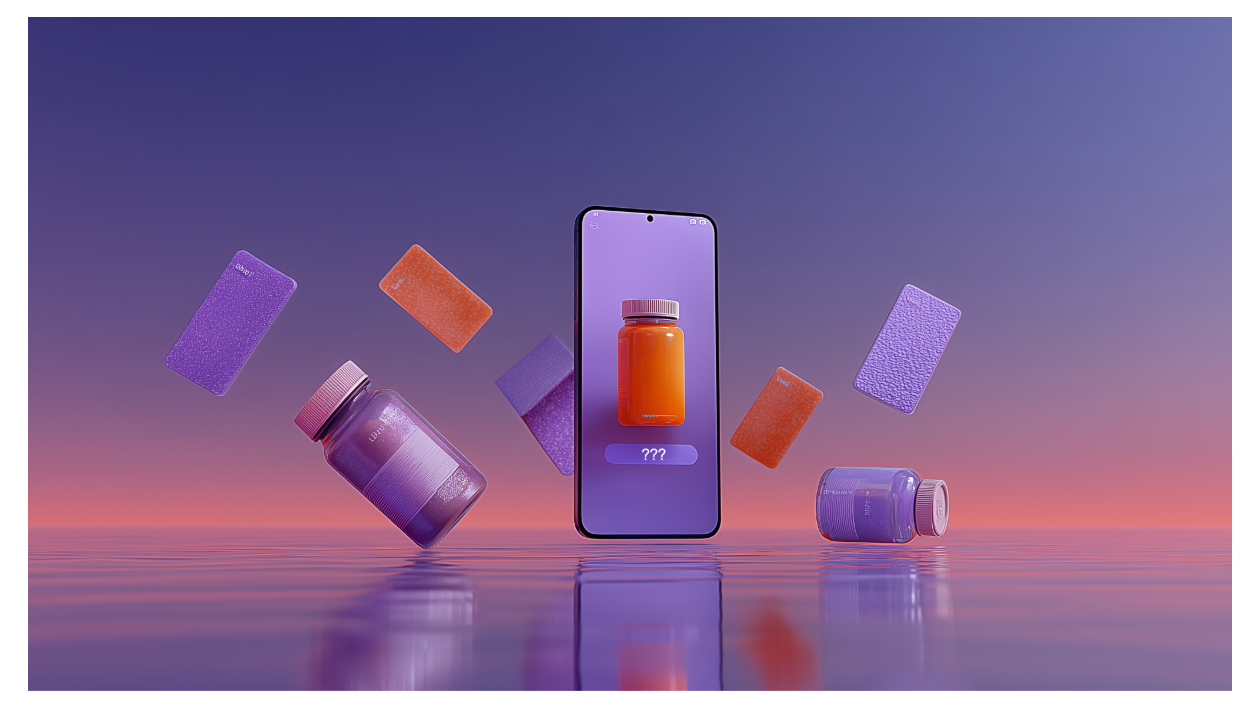

A Shopify product quiz asks shoppers a series of questions about their preferences, needs, or goals, then recommends the right products based on their answers. Product quizzes routinely convert at rates between 25% and 40%, compared to the 2.5–3% average for Shopify stores. They also collect zero-party data, which is information customers share willingly, that feeds directly into personalized email, SMS, and on-site experiences.
While they are a simple concept, creating a high-performing Shopify product quiz takes effort and understanding of your customers. To help you get started, this guide covers how to build, launch, and optimize a Shopify product quiz in 2026.
At the simplest level, a product quiz is a guided flow: a shopper answers questions, those answers trigger recommendation logic, and the results page displays a personalized product selection with add-to-cart buttons.
That might sound like a product filter or a search bar dressed up in new clothes, but filters and search require shoppers to already know what they want. A quiz works in the opposite direction: it starts with the shopper's situation ("My skin gets dry in winter," "I want to sleep better," "I'm buying a gift for someone who loves cooking") and works backward to the right product. The shopper doesn't need to know your catalog, instead, the quiz does that work for them.
Most Shopify stores carry enough SKUs to create a real decision problem.
A customer lands on a collection page with 47 moisturizers, scans the first few rows, and either picks one at random, leaves to search Reddit for advice, or bounces entirely. This is called the paradox of choice, and it gets worse as catalogs grow.
Quizzes cut through that friction. McKinsey research found that 71% of consumers expect personalized interactions from brands, and 76% get frustrated when they don't get them. An Epsilon study showed 80% of consumers are more likely to buy from a brand that offers personalized experiences.
"71% of consumers expect personalized interactions from brands, and 76% get frustrated when they don't get them." — McKinsey, The Value of Getting Personalization Right
There's also a data angle. Third-party cookies are going away, and browsers are limiting cross-site tracking. Quizzes give merchants a direct, privacy-compliant way to learn about their customers. When a shopper tells you they have sensitive skin, prefer fragrance-free products, and want a morning routine under five minutes, that's zero-party data you own outright.
Product recommendation quizzes are the most common. "Find your perfect foundation shade." "Which supplement stack is right for you?" They match shopper preferences to specific products.
Routine and bundle builders go further. Instead of recommending a single product, they assemble a multi-step regimen or a curated bundle. Skincare brands use these heavily, but supplement brands and haircare companies have adopted the format too.
Gift finders serve a different audience entirely. The shopper isn't buying for themselves, so product knowledge is close to zero. A gift finder quiz asks about the recipient and narrows a large catalog into a short, confident list.
Size and fit finders reduce returns. They ask about body measurements, fit preferences, and sometimes brand comparisons ("What size do you wear in Nike?") to confidently recommend the right size.
Educational quizzes teach and recommend at the same time. "What's your skin type?" walks a customer through the basics of skin classification, then uses their answers to match products. The education builds trust and the recommendation drives revenue.
Which type works best depends on your catalog and your customer's biggest point of confusion. If people don't know what they need, a recommendation quiz works well. If they know what they need but aren't sure of the specs, a fit finder is better. If your products work as a system, a bundle builder makes sense.
Standard ecommerce conversion rates sit between 1.9% and 3% depending on the source and the industry. Quizzes outperform that range significantly.
Interact's 2026 Conversion Rate Report found that 40.1% of people who start a quiz become a lead, a number that has held steady since the company launched in 2013, across more than 80 million leads generated. The Content Marketing Institute reports that interactive content produces 2x more conversions than passive content, and Demand Metric data shows users spend an average of 13 minutes engaging with interactive content versus 8.5 minutes with static formats.
“40.1% of people who start a quiz become a lead. That number has held steady across 80 million+ leads generated since 2013. — Interact, 2026 Quiz Conversion Rate Report”
The conversion advantage comes from two things. First, quizzes pre-qualify purchase intent. A shopper who completes a quiz has already told you what they want, and they're seeing products matched to those exact preferences. Second, the results page acts as a curated landing page, personalized for one person, with the ability to include social proof and add-to-cart buttons right there.
Guided selling naturally lends itself to cross-sells and bundles. When a quiz recommends "Your complete morning routine" with a cleanser, serum, and moisturizer, the average order is larger than a single product purchase. Shoppers also tend to trust quiz-generated recommendations more than they trust algorithmic "You may also like" widgets, because they gave the inputs themselves.
The AOV lift varies by implementation. Some merchants report 15–30% increases when moving from a standard browse-and-buy flow to a quiz funnel. The gains tend to be largest for brands selling products that work as a system: skincare routines, supplement stacks, curated gift boxes.
Zero-party data refers to information a customer intentionally and proactively shares with a brand. Quiz answers are a textbook example. Unlike first-party data (inferred from behavior like clicks and page views), zero-party data comes directly from the customer's own words.
This matters because the data is both accurate and actionable. When someone tells you they're training for a marathon and trying to improve recovery, you know exactly what email content, product recommendations, and offers to send them. Forrester research indicates that zero-party data drives 25–40% higher email engagement compared to generic campaigns. Product quizzes specifically convert 30–50% of participants into email subscribers with rich preference data attached.
The compounding effect is real. Every quiz completion adds another data-rich customer profile to your email list. Over months, the segments you can build become increasingly precise, and the gap between your personalization capability and your competitors' widens.
Better product matching means fewer mismatched purchases. This is straightforward for size finders (the shopper gets the right size, so the item fits), but it applies more broadly. When a quiz steers a customer away from a retinol serum because they indicated sensitive skin and toward a gentler alternative, that's a return prevented and a support ticket avoided.
Support teams at stores with active quizzes often report fewer "Which product should I get?" inquiries, because the quiz handles that question at scale, 24 hours a day.
Every quiz needs one clear primary objective. Most fall into one of three categories:
You can achieve more than one, but your design decisions should serve the primary goal. For a beauty brand launching a shade-matching quiz, the goal is probably immediate conversion. For a supplement brand whose products require education before purchase, email capture and nurture might be more valuable. A food brand with a broad catalog might prioritize segmentation so they can run highly targeted campaigns later.
Write down your primary goal before you build anything. It determines question design, results page layout, and where you place the quiz on your site.
Five to eight questions is the sweet spot for most quizzes. Fewer than five and you probably don't have enough signal to make a good recommendation. More than ten and completion rates drop sharply.
Question types to consider:
Question order matters as well. Start with easy, engaging questions that the shopper can answer without thinking hard. "What's your biggest skin concern?" is friendlier as an opener than "What's your Fitzpatrick skin type?" Move toward specifics as the quiz progresses. By question four or five, the shopper is invested in seeing their results and will tolerate more detailed questions.
Avoid questions that feel irrelevant to the outcome. Every question should map to either a product attribute (used in recommendation logic) or a segmentation property (used in email/SMS targeting). If a question doesn't serve one of those two functions, cut it.
Start simple. Tag-based matching is the most common approach for first-time quiz builders. Each answer maps to one or more product tags, and the results page shows products that match the most tags from the shopper's answers.
Three levels of recommendation logic:
The most common mistake is overcomplicating logic on your first quiz. A simple tag-based system with eight products and clear matching criteria will outperform a convoluted scoring model with bugs in it. Get the first version live, see how shoppers respond, and add complexity as you learn what matters.
The results page is where revenue happens. Treat it like a sales page, because that's what it is.
“The results page is your sales page. If it looks like a regular collection page with different products, you've wasted the personalization opportunity.”
A high-converting results page typically includes:
The "why this is for you" copy is what separates a quiz results page from a regular collection page. Instead of generic product descriptions, you're reflecting the shopper's own answers back to them: "Because you told us you have dry skin and prefer lightweight textures, we recommend..." That reflection builds trust and closes the gap between browsing and buying.
The quiz-to-email flow is where the long-term revenue lives. A quiz completion gives you structured preference data attached to a real email address. That's a segmentation goldmine.
Here's a practical setup using Klaviyo (the most common email platform for Shopify stores): pass quiz answers as custom profile properties. If someone answers "dry skin," "anti-aging," and "morning routine," those values land on their Klaviyo profile. You can then build segments like "Dry skin + anti-aging" and send targeted content, testimonials from similar customers, and personalized promotions.
A basic post-quiz email flow:
Each email in this sequence can reference the shopper's quiz answers by name. "Hi Sarah, since you mentioned your skin gets dry in winter, here's how our customers with similar skin handle the transition between seasons." That level of specificity produces materially higher open and click rates than generic welcome series.
“Every email in the post-quiz sequence can reference the shopper's answers by name. That specificity is the difference between a 20% open rate and a 45% open rate.”
Where you place your quiz affects how many people find it. The highest-visibility placements:
Sensez is built exclusively for Shopify, which means native performance without the overhead of supporting other platforms. The Klaviyo integration passes structured quiz data as profile properties, so your email and SMS segmentation can be as granular as your quiz design allows.
Where Sensez differs from most quiz apps is the level of hands-on support. You're working with a team that helps optimize quiz strategy, question design, and results page performance, not just software that leaves implementation to you.
Yes. The data is consistent on this. Interact reports a 40.1% quiz-to-lead conversion rate across 80 million+ leads. Interactive content broadly produces 2x more conversions than static content. Individual Shopify merchants regularly report double-digit conversion rates from quiz funnels, compared to the platform's 2.5–3% baseline.
Five to eight for most stores. Fewer than five usually doesn't capture enough information for a confident recommendation. More than ten creates friction that kills completion rates. The exception is complex categories (custom supplements, detailed size matching) where shoppers expect and tolerate a longer quiz.
It depends on your priorities. If you need deep Klaviyo integration, hands-on optimization support, and native Shopify performance, Sensez is built specifically for that use case. Evaluate any app against the criteria in the "What to Look For" section above.
A simple recommendation quiz with tag-based logic can be live in under an hour with the right app. More complex setups involving weighted scoring, conditional branching, custom results page designs, and email flow integration typically take a few days to a week.
Yes, and this is one of the most valuable things you can do with quiz responses. Apps like Sensez pass quiz answers as custom profile properties in Klaviyo, which means you can build segments based on specific answers (e.g., "skin type = dry" or "goal = weight loss") and trigger automated flows that reference those properties in the email copy itself.
It depends on the app's architecture. Native Shopify apps that run within the platform's infrastructure typically have minimal impact on page load. Apps that rely on external iframes or heavy JavaScript can add noticeable load time. Ask the app provider about their page speed impact before installing, and test your Core Web Vitals score before and after.
Beauty and skincare see the broadest adoption and some of the highest completion rates. Supplements and wellness benefit from the education and trust-building that quizzes provide. Fashion and apparel use fit finders to reduce returns. Food, beverage, and subscription box companies use taste profiles to reduce churn. Any store where customers face a confusing product selection is a candidate. Stores that might be considered more taboo, such as adult products or CBD brands, can benefit from using quizzes to help shoppers reach their preferred products as quickly as possible.
Quizzes convert at several multiples of standard product pages, collect data that gets more valuable with every completion, and feed personalized marketing that compounds over time. The gap between a shopper browsing your catalog and that same shopper making a confident purchase is a decision, and a well-built quiz makes that decision easier.
Build your first Shopify product quiz with Sensez